Metal Products
Custom Medals: Price, MOQ and Production Guide
What custom medals cost, how MOQ and pricing tiers work, and how production runs from artwork to delivery. A practical guide for event organizers and buyers.
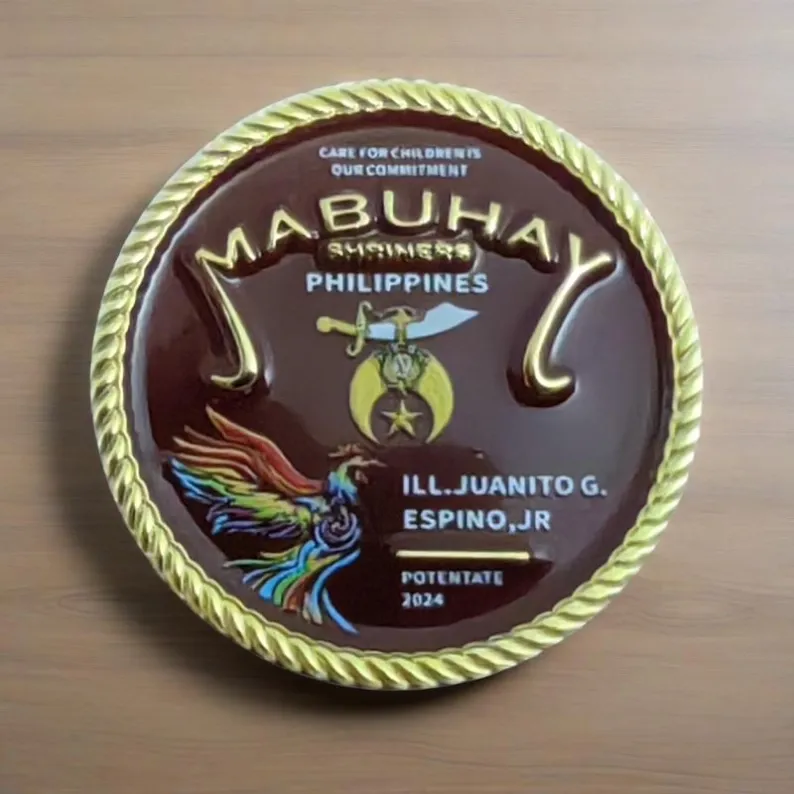
What Drives the Price of a Custom Medal
Custom medal pricing is not a single number — it moves with five variables. Understanding them lets you compare quotes properly instead of assuming the cheapest unit price is the best deal.
Size. A 40 mm medal uses roughly half the metal of an 80 mm medal. Size is usually the first thing to adjust when a budget is fixed.
Material. Zinc alloy is the standard for most designs. Brass costs more but feels heavier and holds finer detail. Iron is the budget option for very large runs where weight matters less than unit cost.
Relief and complexity. A flat 2D design needs less tooling than a 3D relief with layered depth. Detailed mascots, crests and multiple raised levels increase both mould cost and piece price.
Colour and finish. Single-colour soft enamel is the baseline. Adding multiple enamel colours, hard enamel polishing, epoxy doming or antique plating each adds a step to production.
Quantity. Unit price falls sharply between the first order tier and mass production. Most factories quote in bands — for example 100, 500, 1,000 and 5,000 pieces — and each band has its own per-unit rate.
How MOQ Works for Custom Medals
Most custom medal orders start at 100 pieces per design. This is not arbitrary — it reflects the setup cost of a mould, which is amortised across the run.
Three practical points on MOQ:
- Mixed designs can often be combined. If you need 40 medals for one category and 60 for another, the total may still meet the minimum, provided the size and material match.
- Smaller runs are sometimes possible for simple shapes with existing tooling. Ask before assuming a design is out of reach.
- The MOQ is per design, not per order. A single event with six award categories can still be one order.
The Production Timeline
Stage | Time |
|---|---|
Artwork review and quote | 1 business day |
Digital proof | within 24 hours |
Physical sample | 5–7 working days |
Mass production | 10–15 working days |
Inspection and packing | 1–2 working days |
Air freight | 5–10 days |
Sea freight | 25–40 days |
The two stages that most often slip are sample approval and artwork revision. Approving the digital proof quickly, and sending print-ready artwork, keeps the whole schedule on track.
What to Send for an Accurate Quote
A quote is only as precise as the brief behind it. To get a price you can actually plan around, include:
- Event type and intended use
- Quantity per design
- Preferred size and shape
- Material and plating preference
- Number of enamel colours
- Ribbon requirements and colours
- Engraving on the reverse, if needed
- Packaging (poly bag, gift box, or none)
- Delivery deadline and destination
Without size and quantity, any number quoted is an estimate rather than a price.
Sample or No Sample?
For repeat orders of an existing design, production can usually start directly after a digital proof.
For new designs, 3D relief, tight colour matching or high-value orders, a physical sample is worth the extra week. It confirms plating tone, enamel depth and ribbon colour — details that are hard to judge from a screen, and expensive to correct after a full run.
Common Cost Mistakes
Comparing unit prices without comparing scope. One quote may include ribbons and individual engraving; another may not.
Ordering exactly at the MOQ for a growing event. If next year’s run is larger, the mould is already paid for — the second order costs far less per piece.
Leaving freight to the last minute. Air freight can double the landed cost of a small order. Building in three weeks removes that pressure.
Ignoring packaging in the quote. Gift boxes, backing cards and ribbon printing all carry cost, and they are usually quoted separately unless requested.
Getting a Quote
If you have artwork, quantity and a deadline, send them through with your requirements. We will confirm what is achievable, flag any artwork issues and return a quotation with the production schedule attached.